Slow Summer Mornings
A diasporic dive into childish envy, with screen printed silk ribbons and neon cardstock.
There were many differences between my upbringing and my cousins’ in India. One of them was school uniforms. I went to public school in America, where I had the freedom to wear a graphic Bobby Frank tee and a messy bun, but I envied my cousins’ uniforms. I loved their Peter Pan collars and Mary Jane shoes, but it was their ribbons that I wanted most.
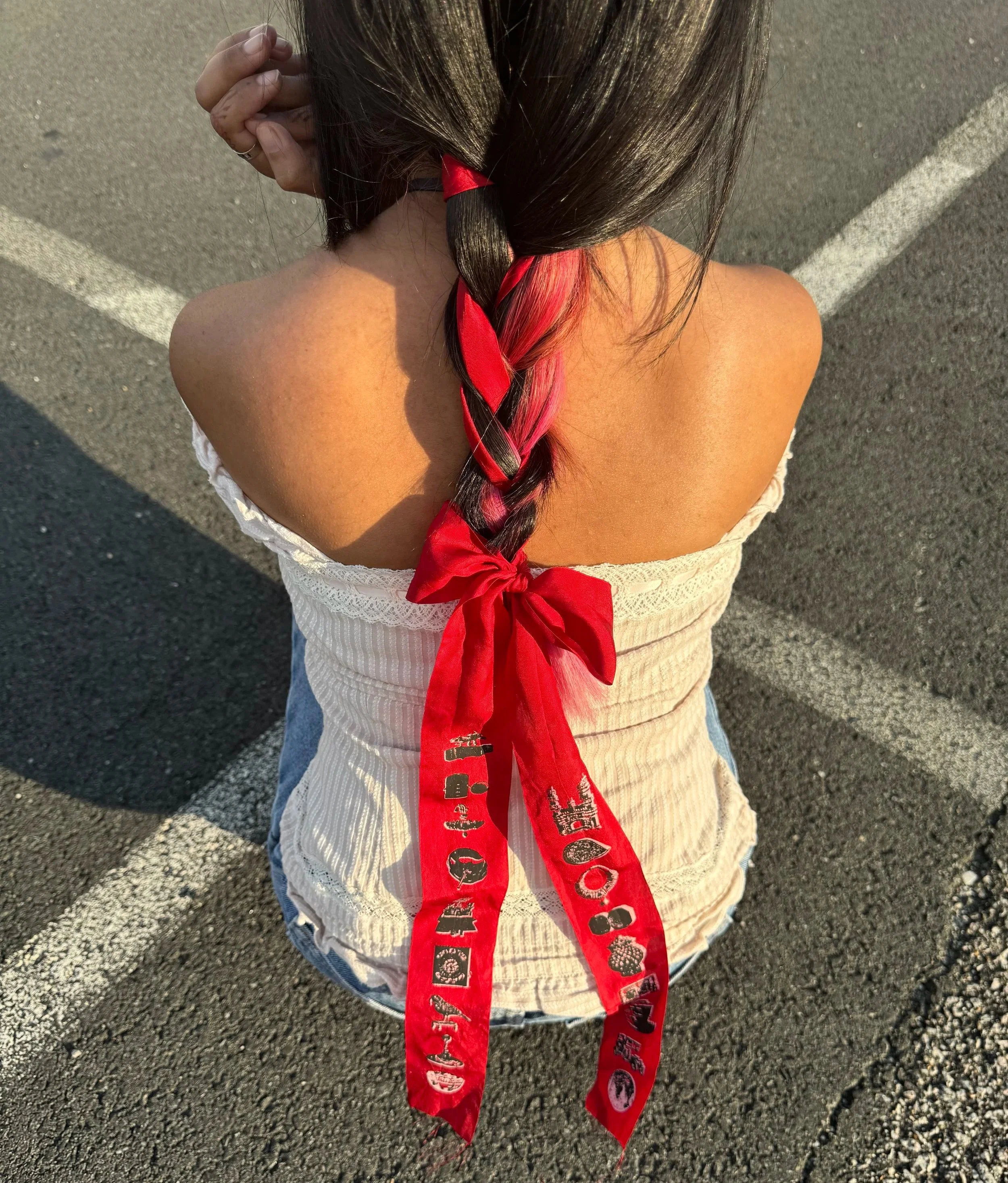
Every morning before school, my grandmother would braid ribbons into my cousins’ hair. Sometimes they were white, sometimes black, but my favorite was red. When I visited during summer break, my cousins were usually in the middle of a monsoon school semester. After getting ready and having breakfast together, they would set off for school. I’d run up to the terrace and watch them go. Our street was long, and our home was tall. From the terrace, all I could really see were their ribbons. Even from a distance, the red ones were visible.
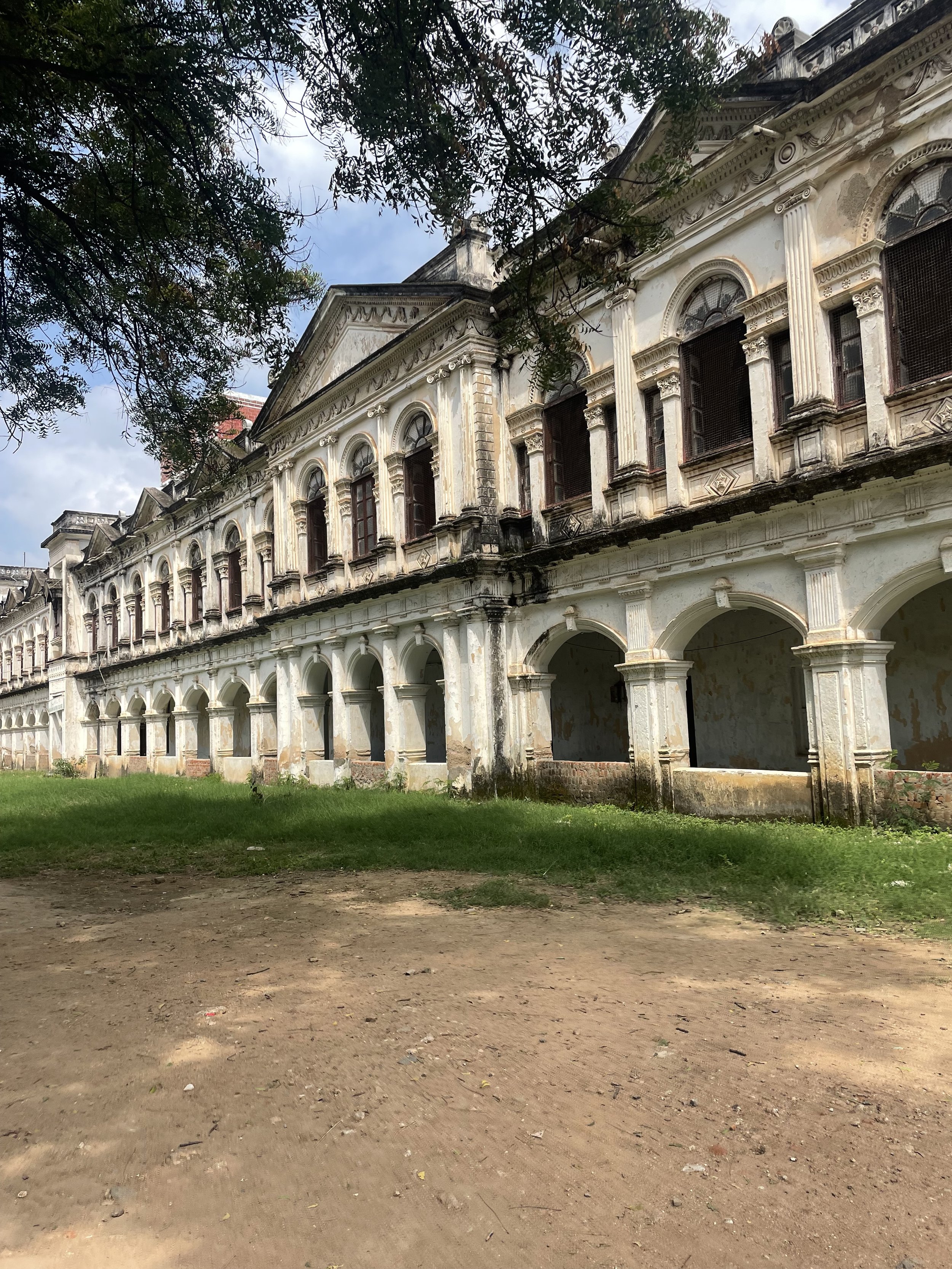
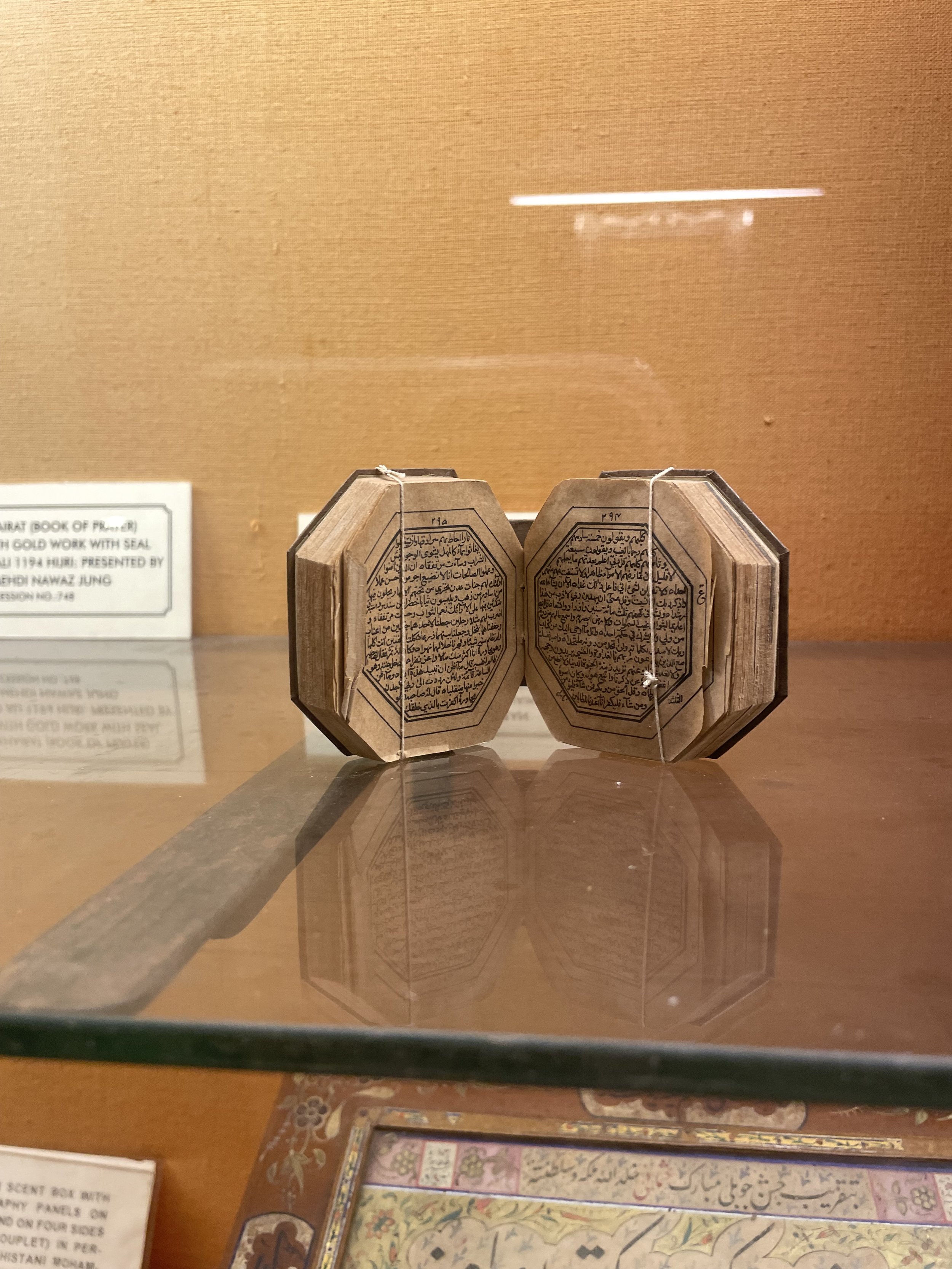
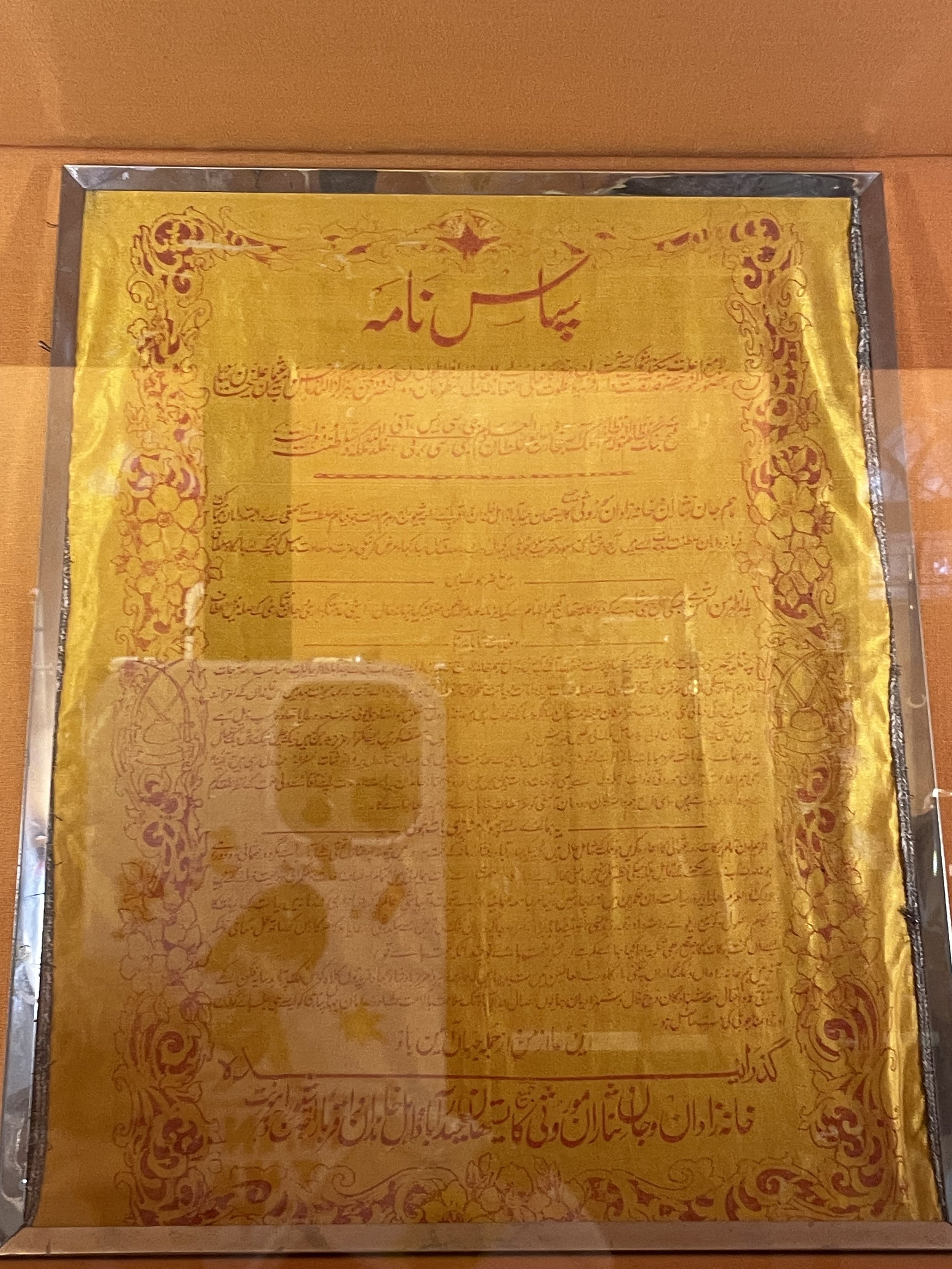
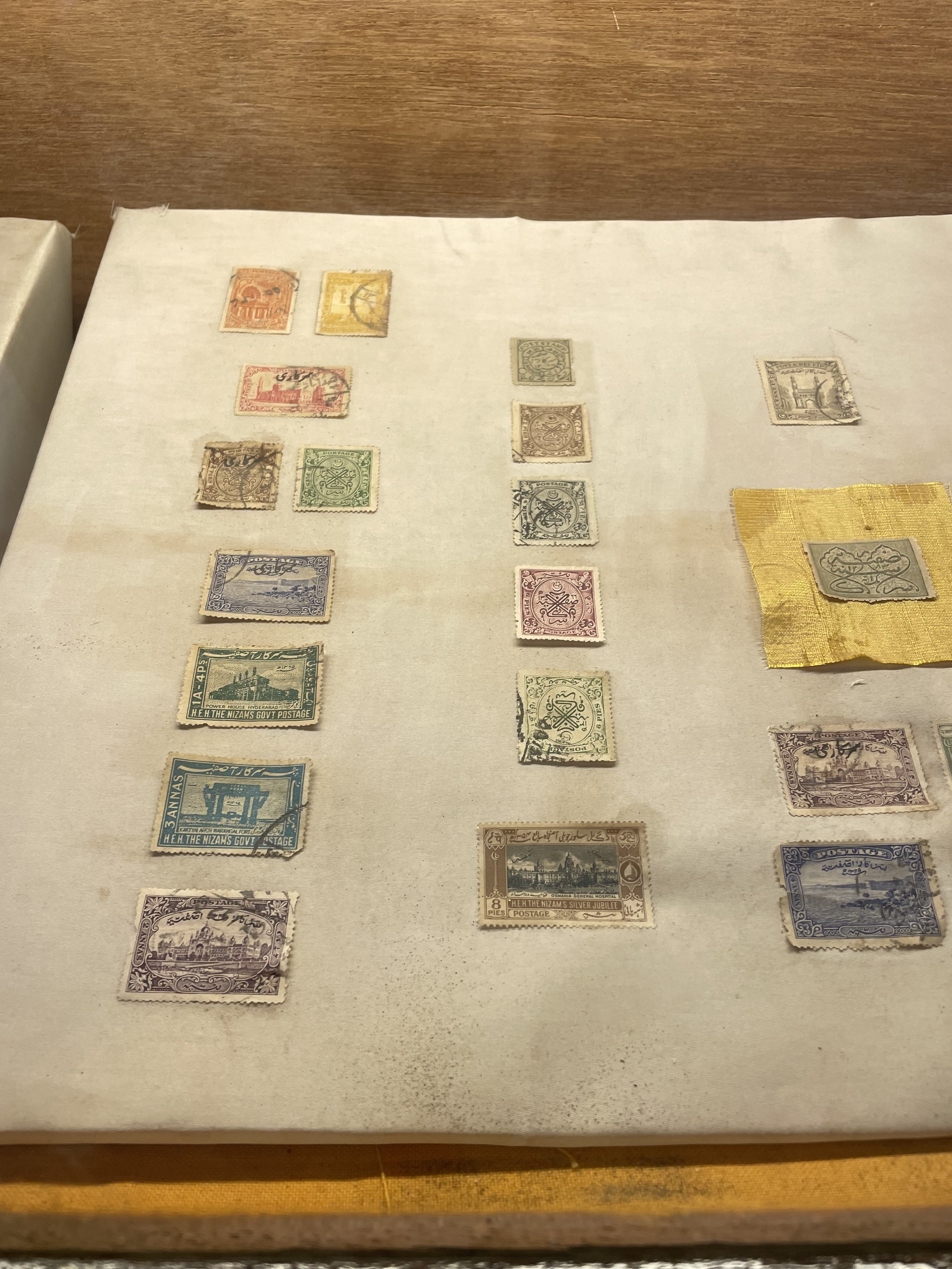
As an adult, I’ve become more interested in the places, objects, and histories that shaped those memories. On my last visit to India, I went to the Nizam Museum in Hyderabad, also known as Purani Haveli. I was drawn to the artifacts and the stories held within them. I wanted to carry some of that history with me, in a form that connected it back to my own memories.
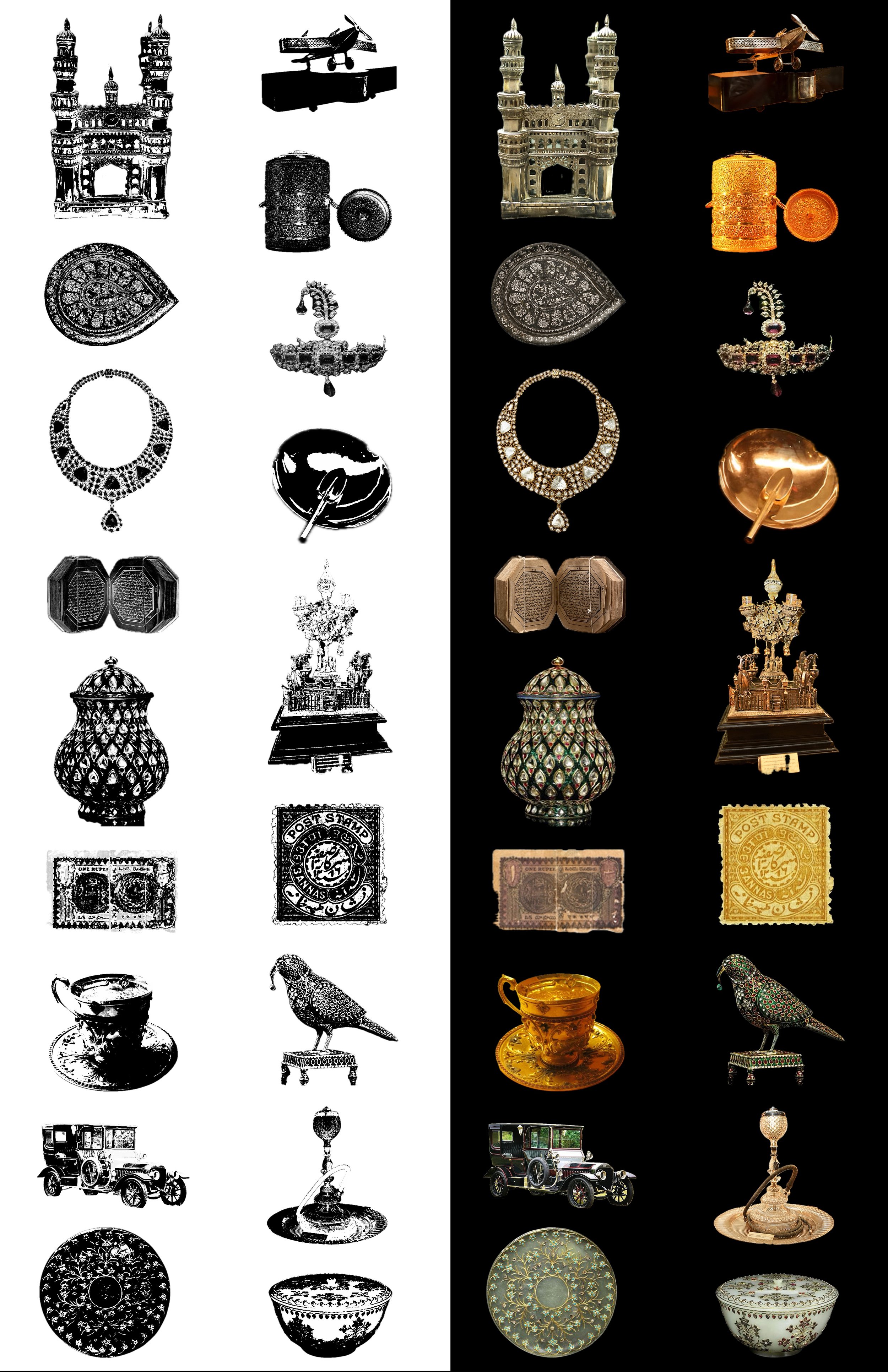
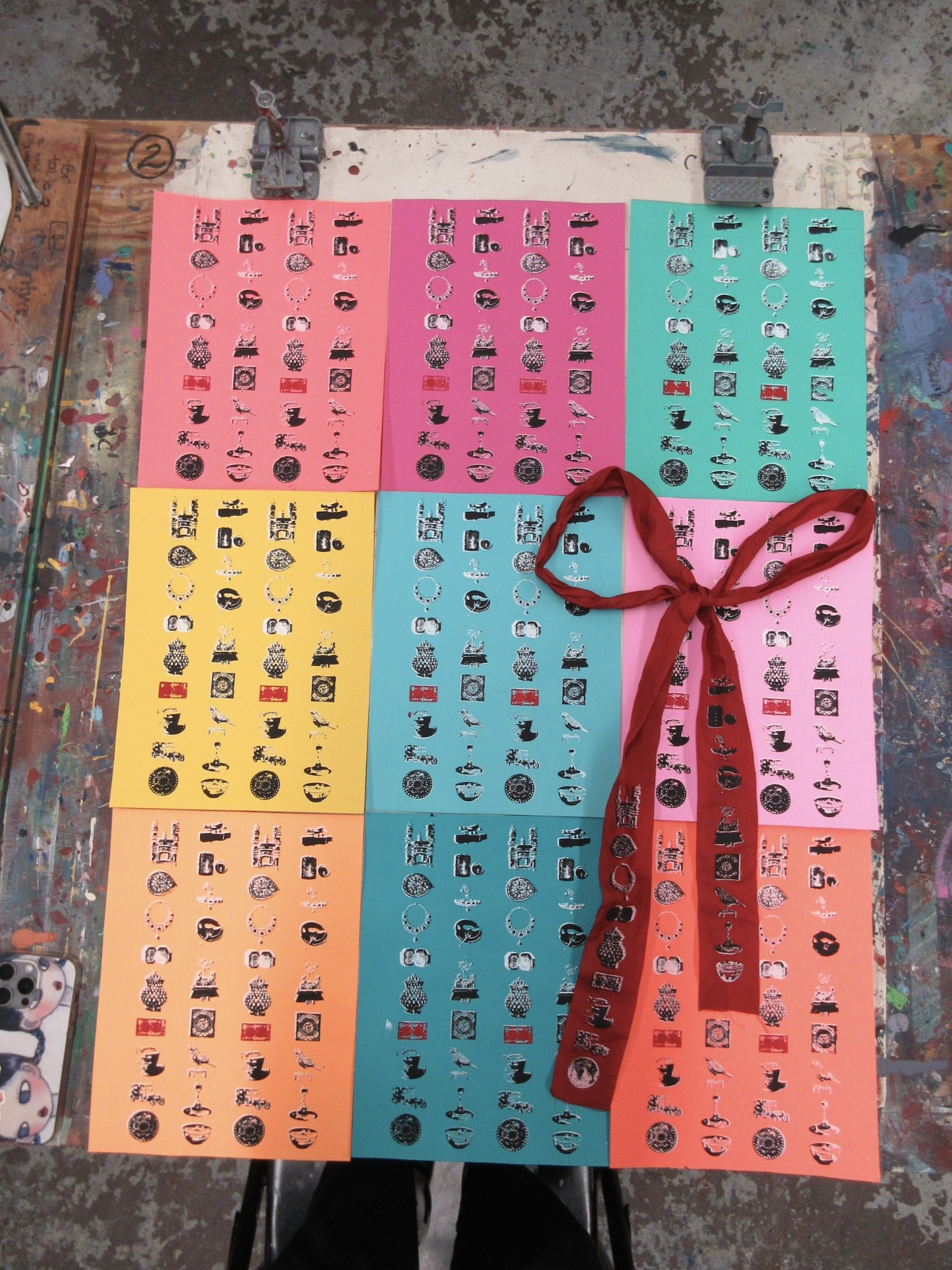
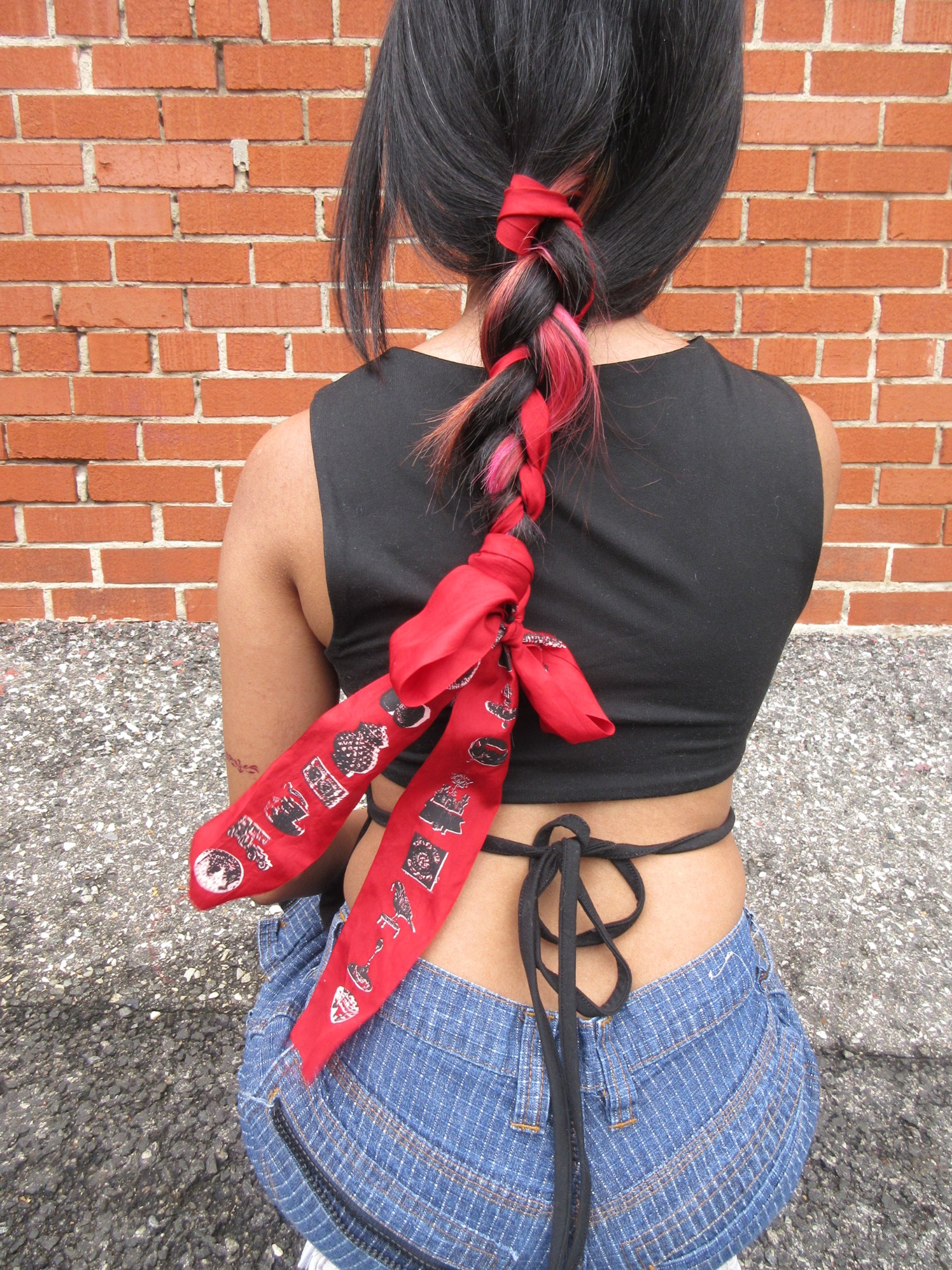
I collected and manipulated images of artifacts from the museum to be printed onto ribbon and worn in my hair.
Failing forward
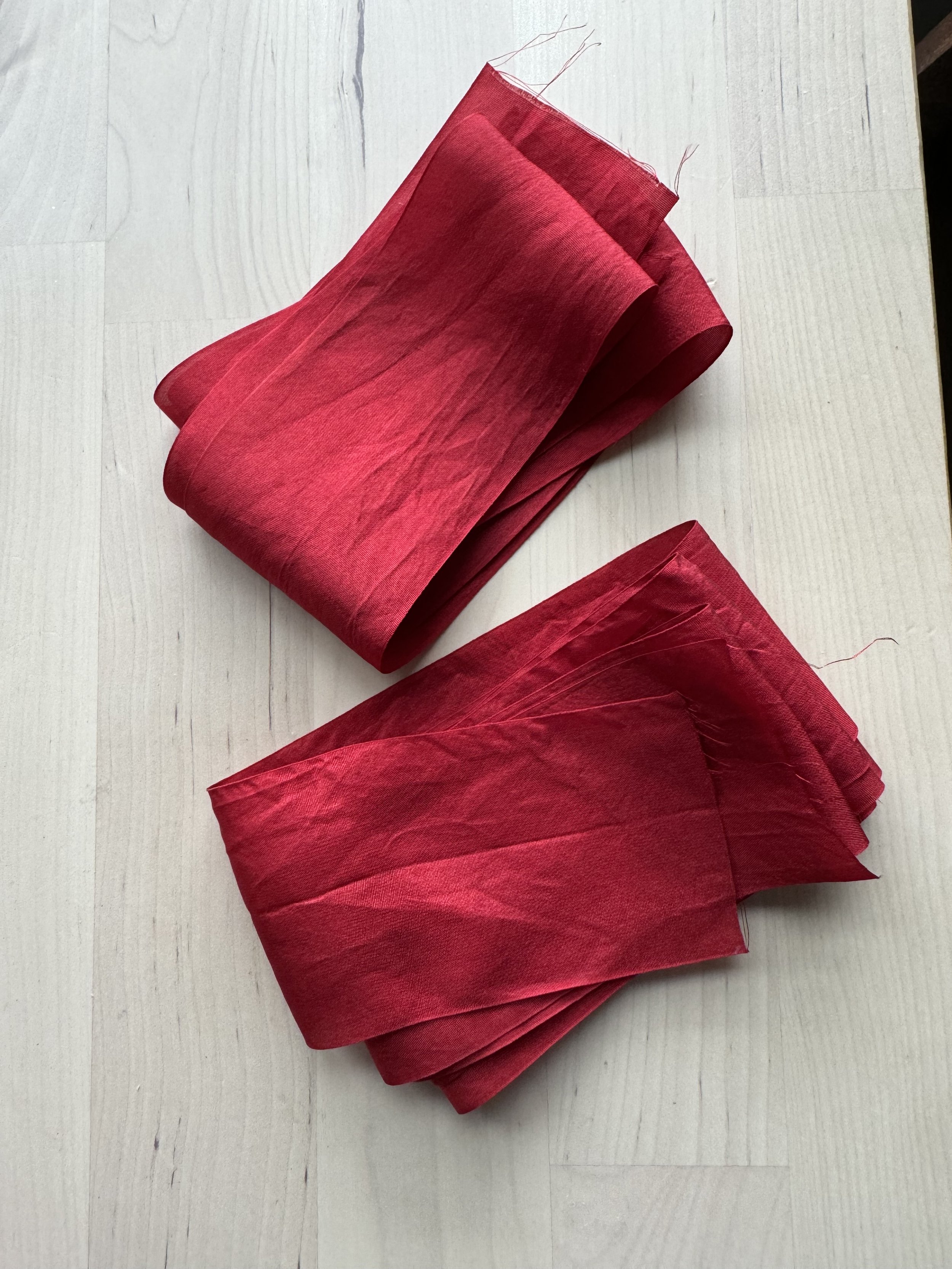
Originally, I had planned to make printed ribbons as a beetroot anthotype. An anthotype is an image created using photosensitive material from plants under the influence of light. Unfortunately, I ran into many complications. Aside from limited space to dye and dry long ribbons, not having my own outdoor space meant I had to lay my set up out to dry on my building’s public rooftop. In the past I left some ceramics to dry and they were stolen, so you can imagine my hesitation. The weather was also unpredictable, it was that time of year of scattered summer storms. Beetroot anthotypes also take up to five weeks to develop. After a couple of failed attempts, it was time to move onto another means of production, screen printing!
Ruined anthotype ribbons after a storm
Screenprinting
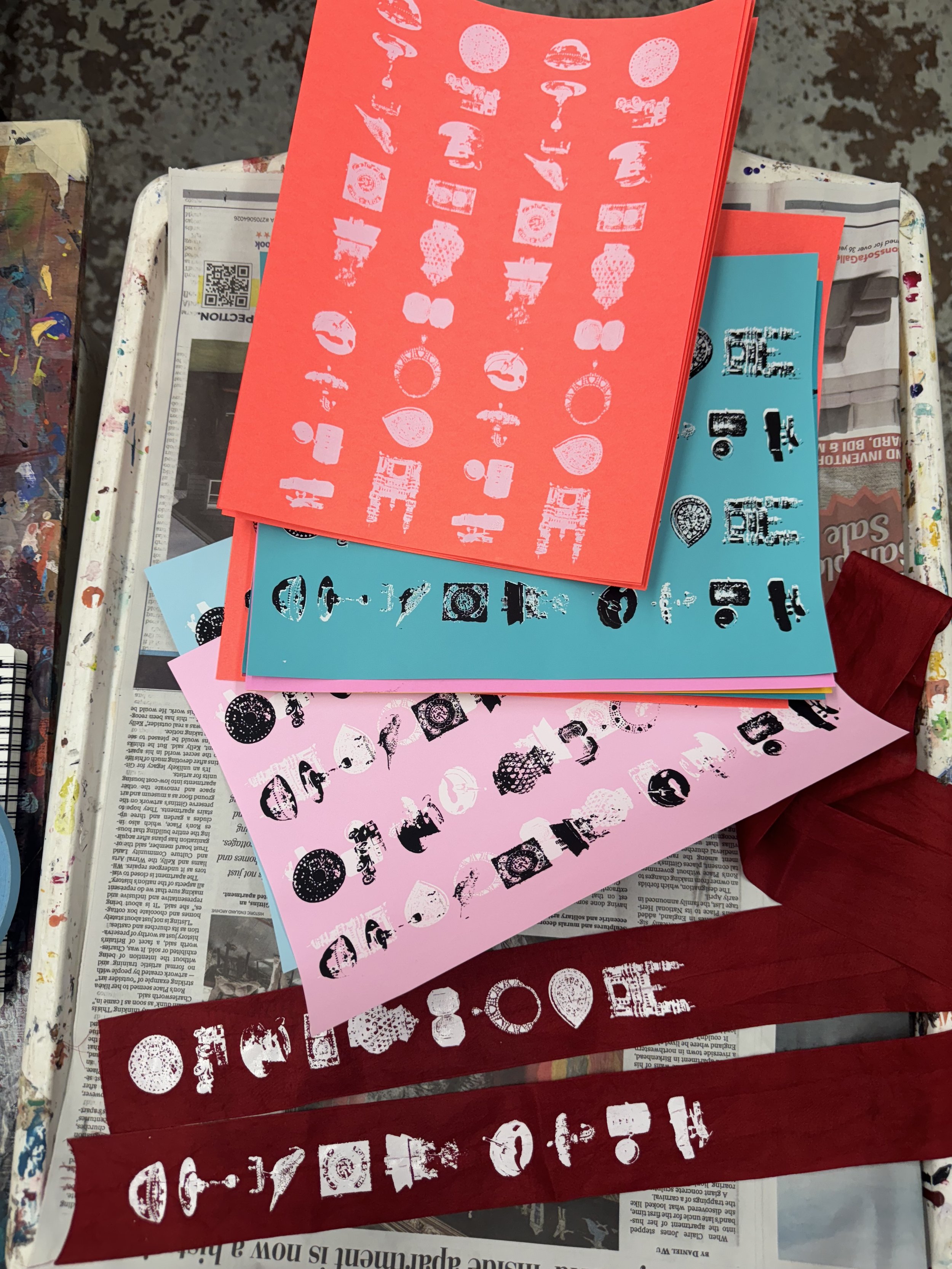
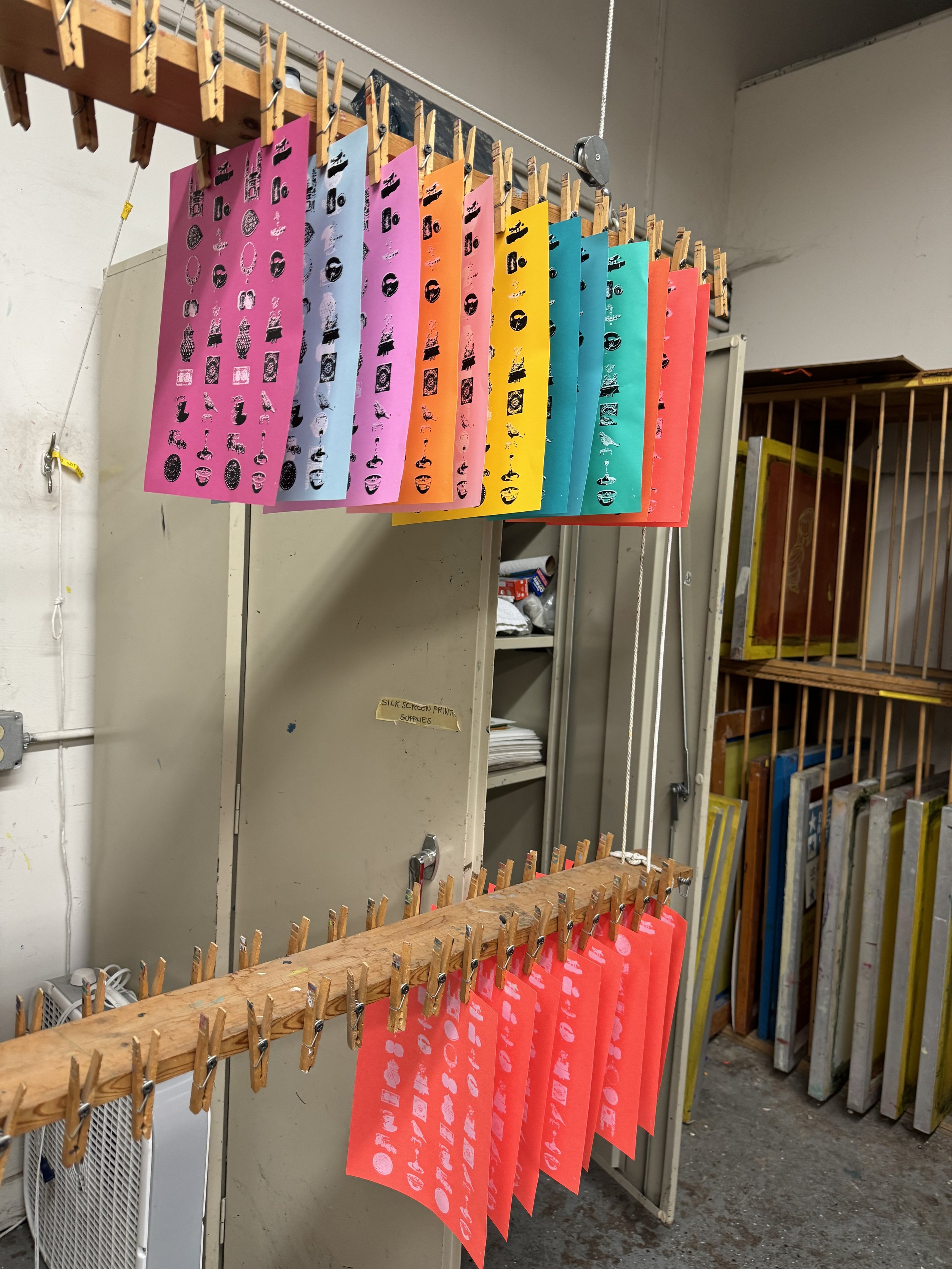
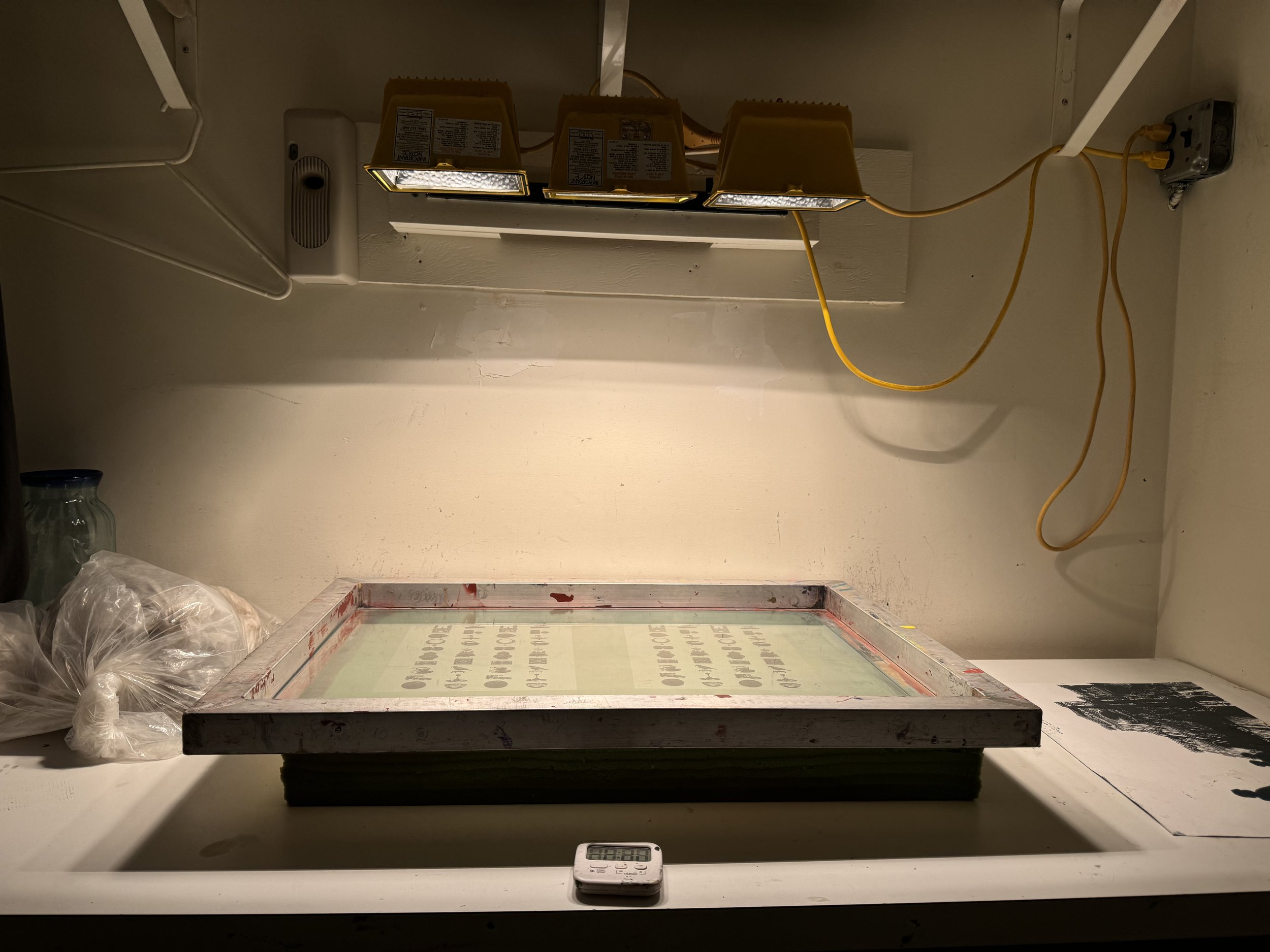
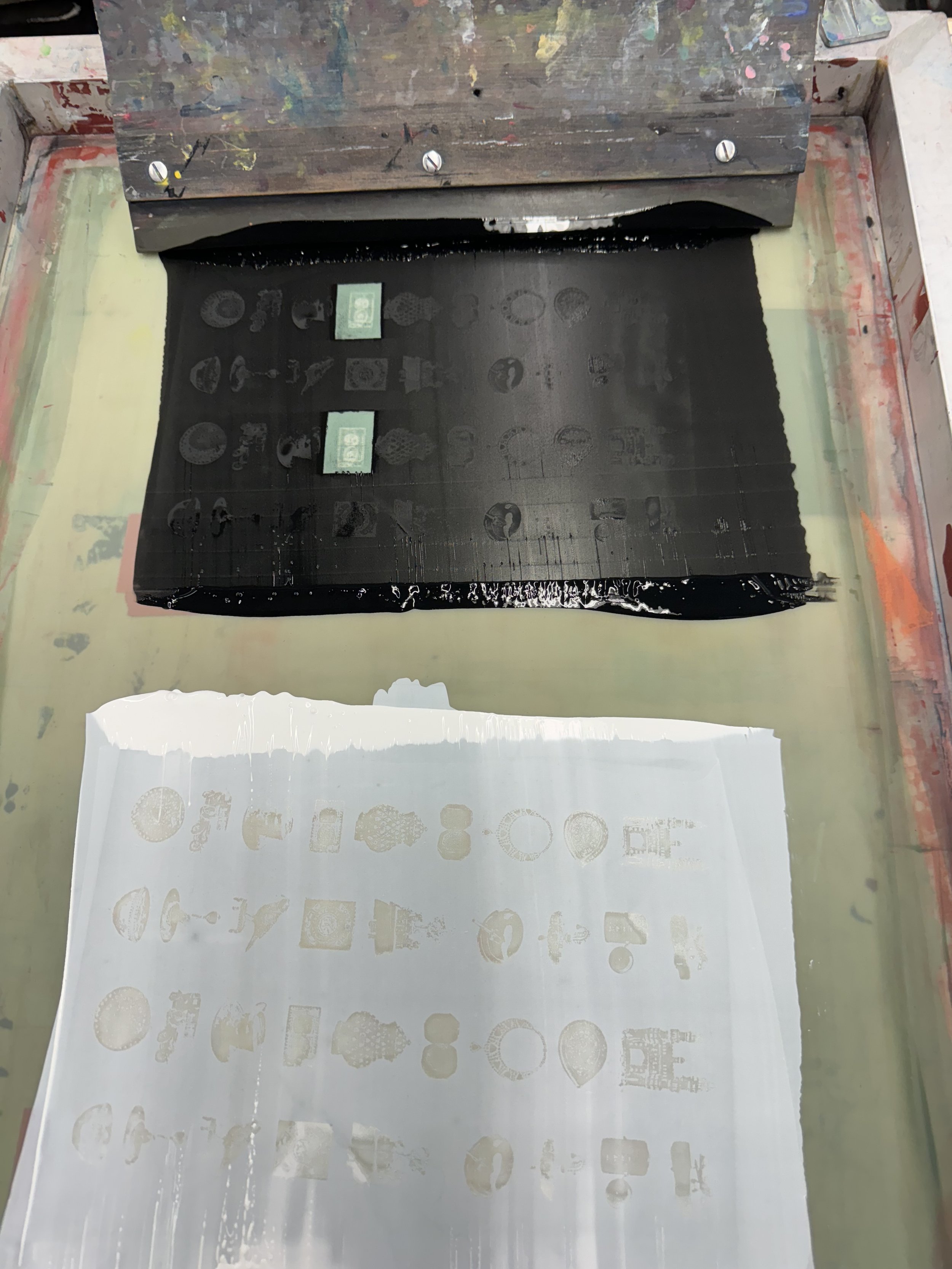
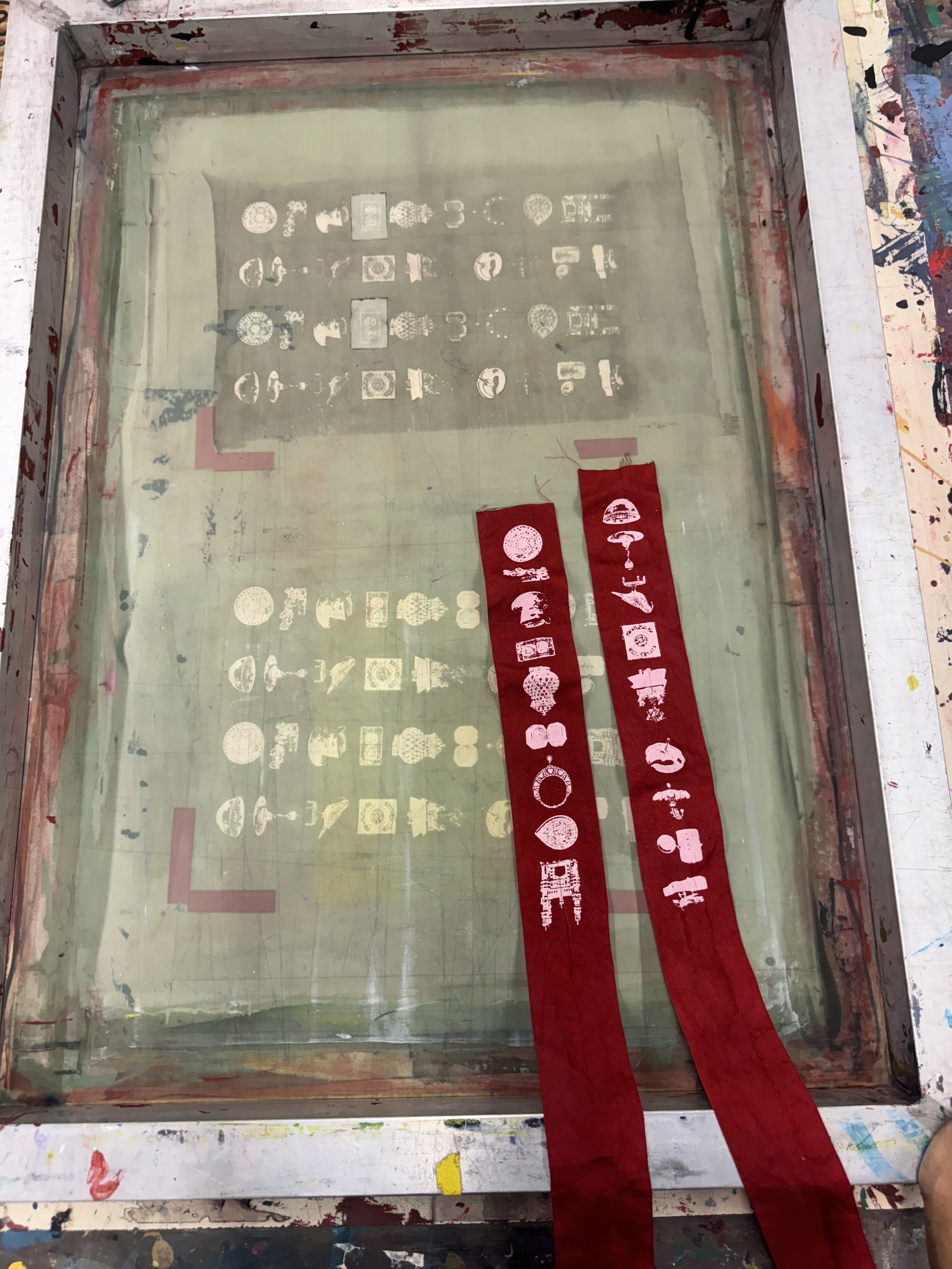
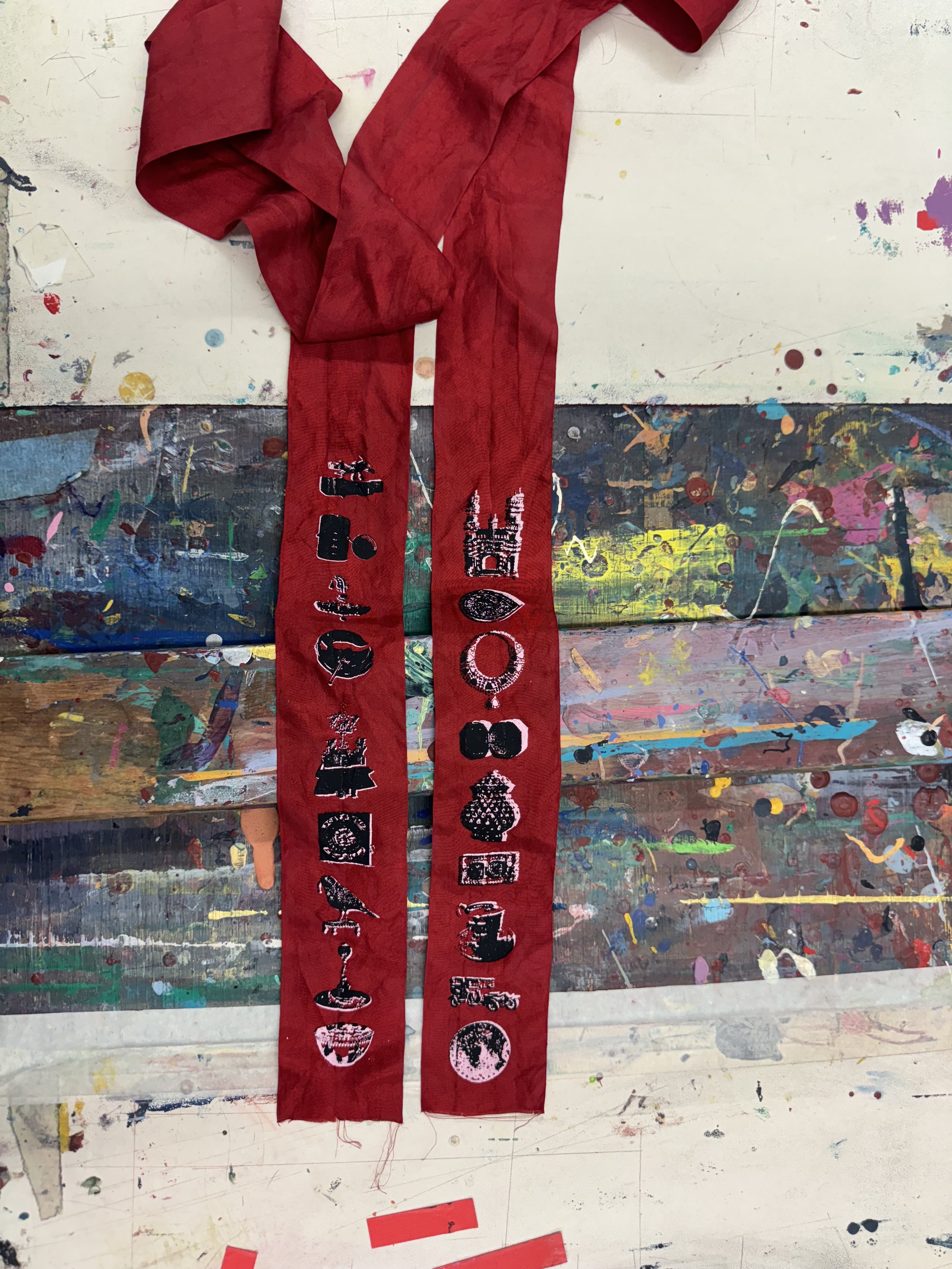
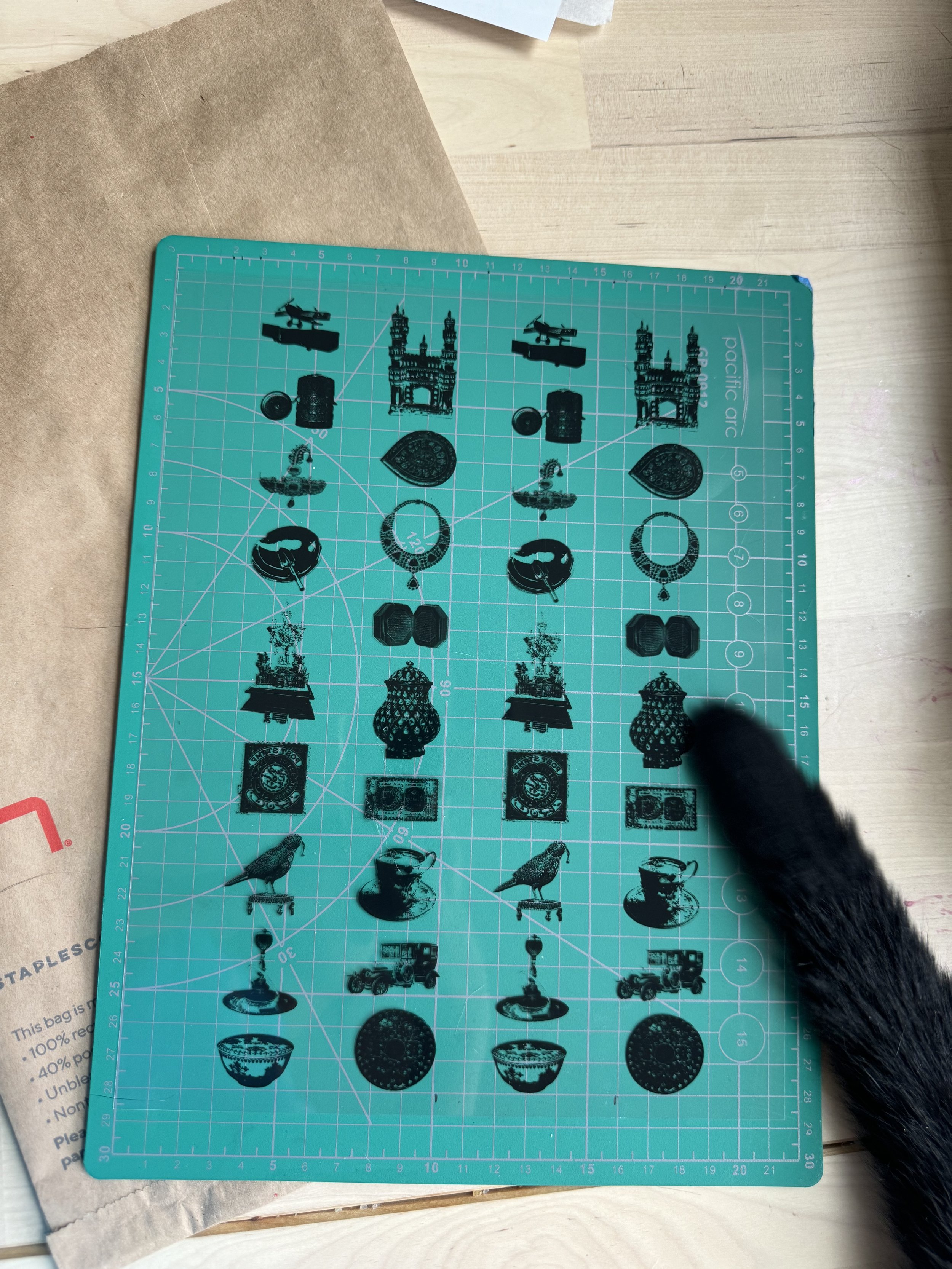
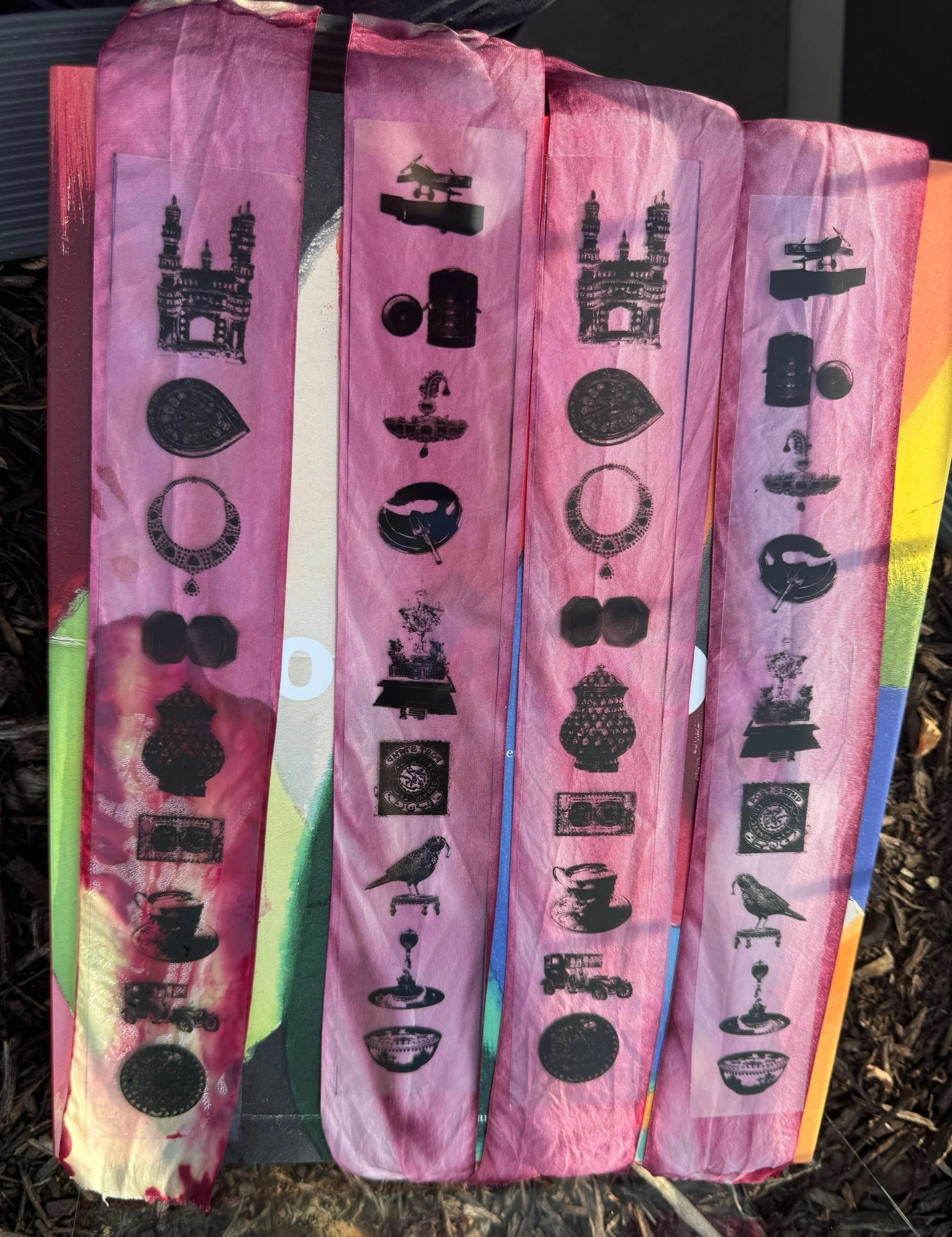
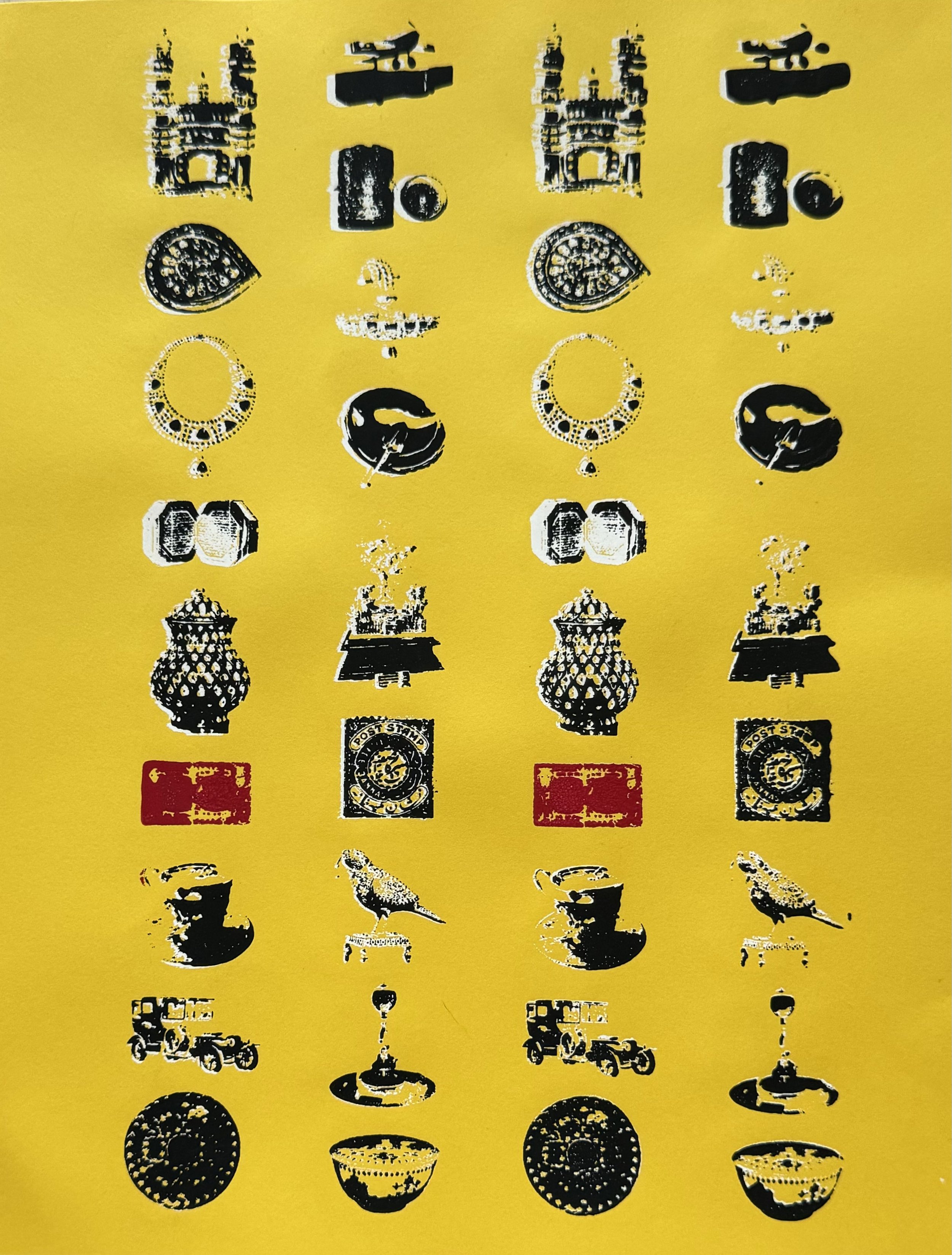
Screenprinting was a truly satisfying solution! I was able to add more depth to the design and complete it in a fraction of the time. I dyed the ribbons a similar shade to what I remembered my cousins wearing. A beautiful, bright, deep red. Note to self: air-dry ribbons or deep clean the dryer afterwards because you will stain the inside and ruin your towels in your next wash. In preparation for printing, I burned a screen with two transparency copies of the design. This allowed me to print a white layer of paint and a black layer of paint without having to wash the paint off between layers and waste studio time. With my remaining time, I also created prints! I used vibrant cardstock to replicate the signage of auto rickshaws. When it rained and my cousins were unable to walk to school or be dropped off by a parent, they caught an auto on the busy streets by themselves to school. I remember thinking that was insane. At that age, I was not even allowed to walk home from school, even though I lived less than 10 minutes away.
To reference the ribbons in the prints, I added another layer with red paint on the Indian Rupee. Although my cousins and I all went to public school, it was mandatory to pay for school in India. Education was a privilege until the Right of Children to Free and Compulsory Education Act was passed in India in 2009. The law accounted for free and compulsory education provided as a fundamental right to children between the ages of 6 to 14. I wonder what it would’ve meant for the older generations in my family if this law had been passed even 50 years ago. I was almost 10 by the time education became a right in India.
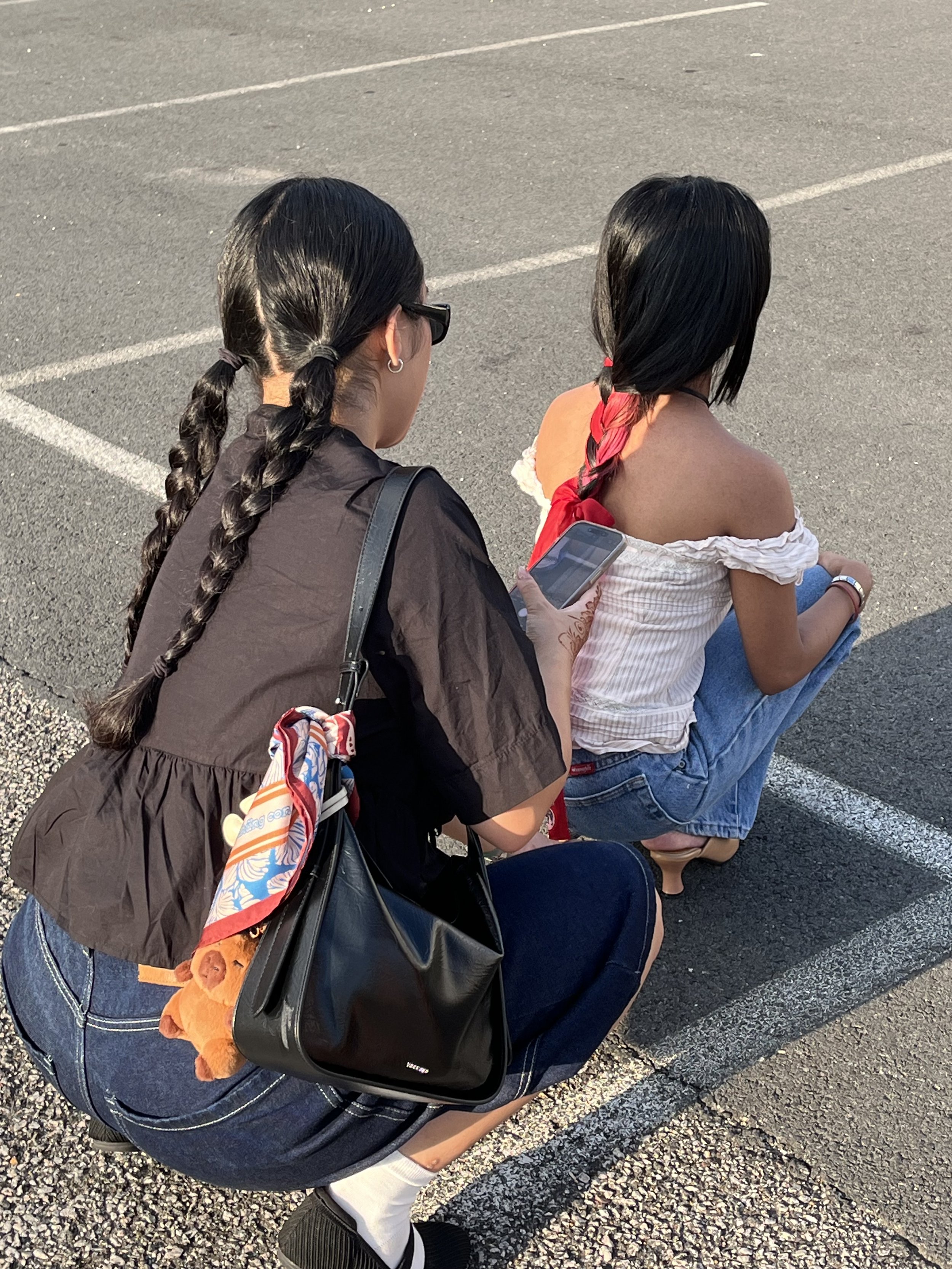
*Special thank you to my girlfriends for helping me braid my hair and take pictures :)