Centers for Medicare and Medicaid Services (CMS)
The Centers for Medicare & Medicaid Services (CMS), is a part of the U.S. Department of Health and Human Services. From November 2023 to June 2025, I served as an end-to-end designer on this project's 160-person workflow. My responsibilities included:
Creating low- and high-fidelity wireframes, building interactive prototypes with WCAG and Section 508 compliance, and presenting solutions to stakeholders
Collaborating closely with Business Analysts, Developers, and the 508 compliance team
Conducting user research through prototype walkthroughs, surveys, scripted prompts, and AI-supported research methods to inform design decisions
01 Collection: Manually Triggered Validations
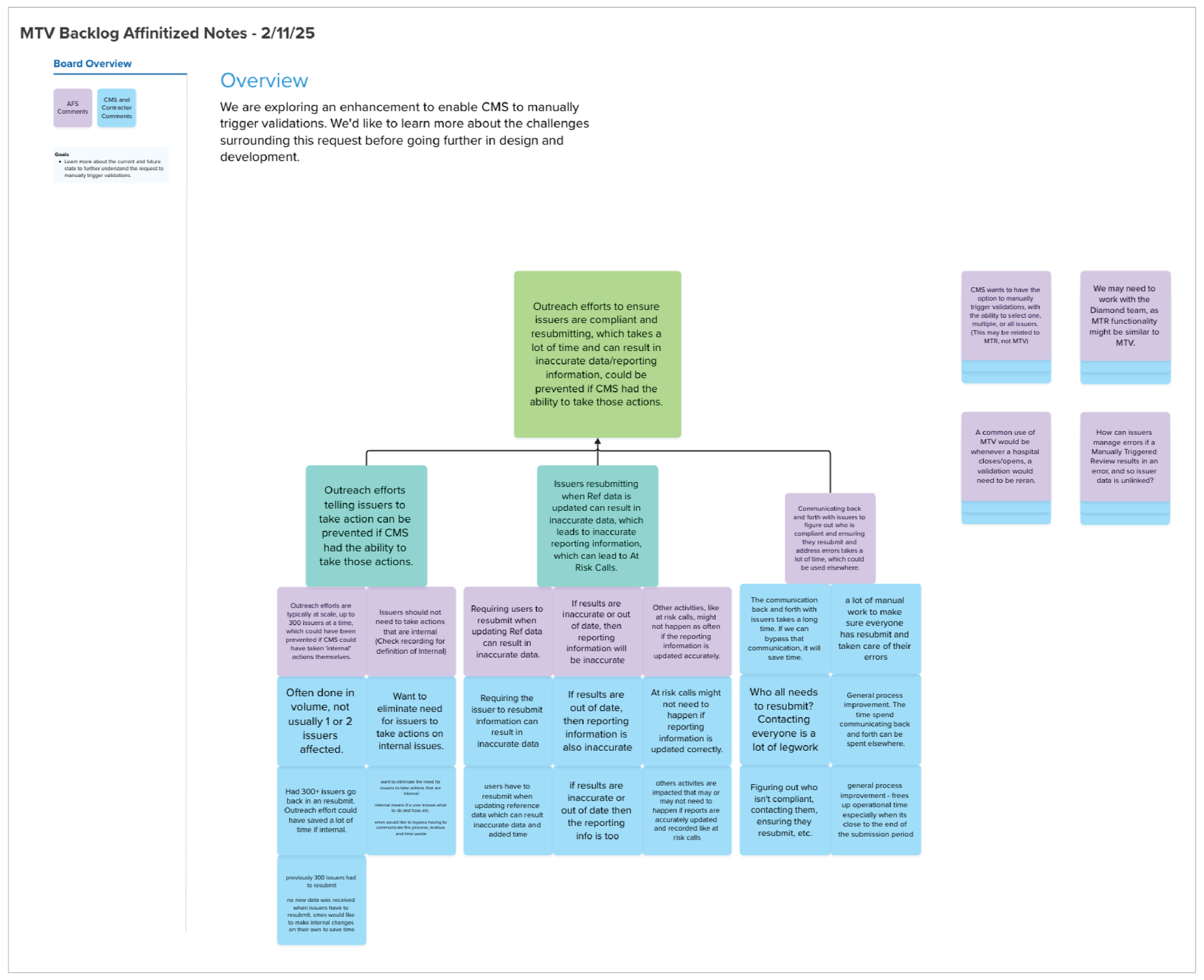
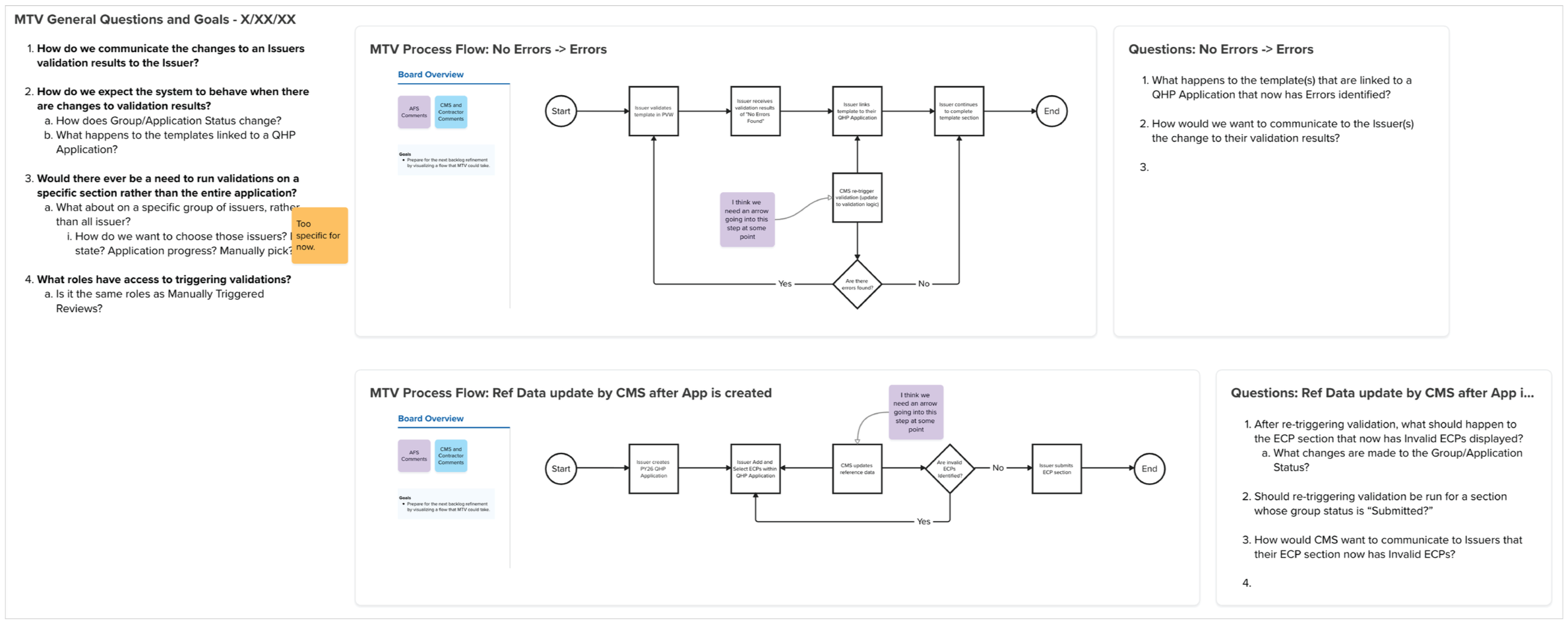
Users struggled with insurance coverage forms when error messages triggered mid-typing, disrupting progress and contributing to missed deadlines.
Partnering with another designer, I synthesized user pain points, stakeholder requirements, and developer constraints, then audited impacted CMS screens to identify high-friction moments.
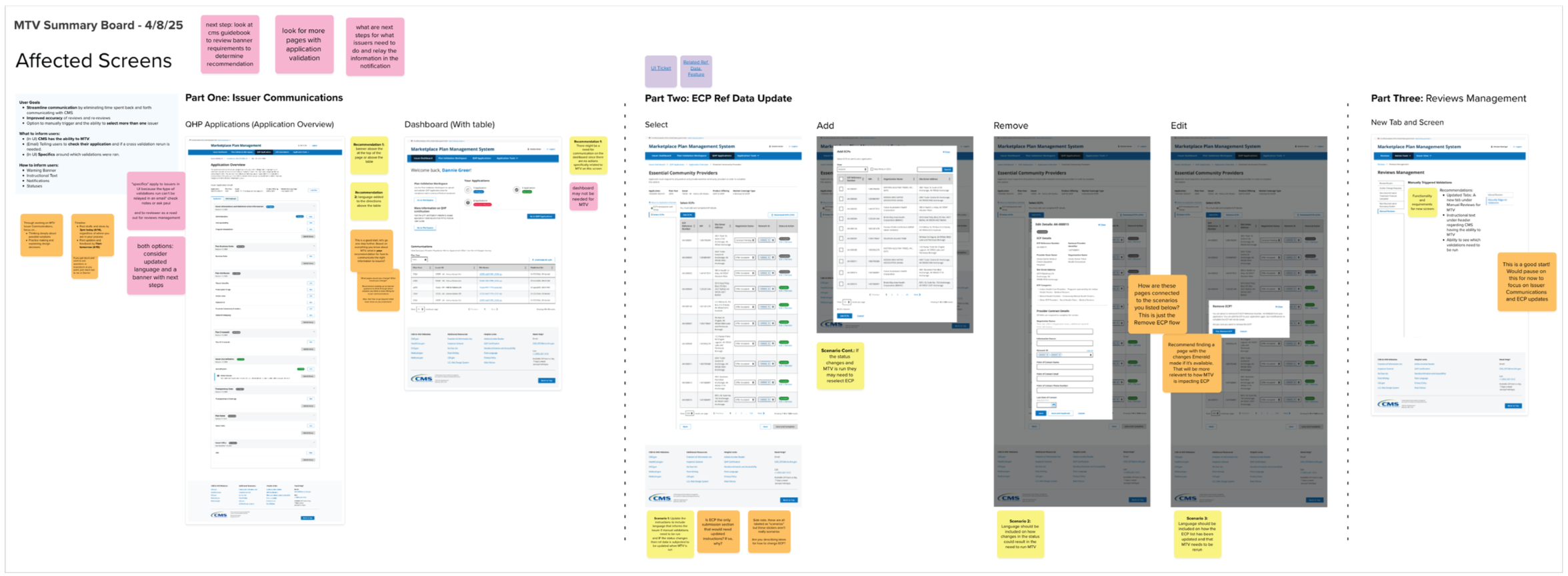
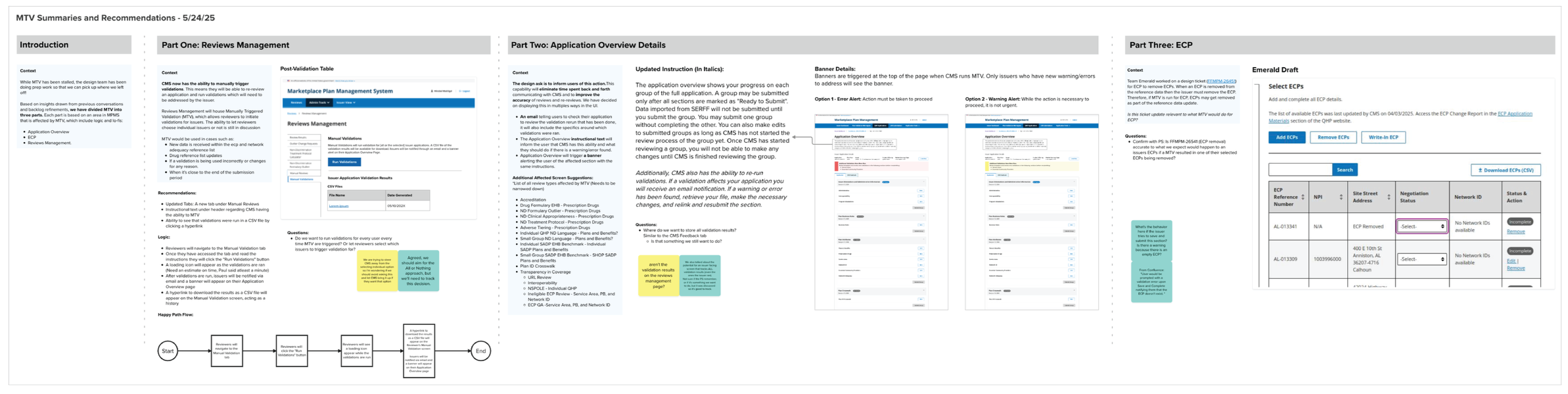
I introduced Manually Triggered Validations (MTV), ensuring errors appeared only after field completion or at submission.
Through iterative wireframing on Mural and prototype testing on Figma, we demonstrated clearer user progression, reduced cognitive load, and smoother form completion, while maintaining WCAG and Section 508 compliance.
Improved interaction clarity
Reduced submission friction and an increase in completed forms
Cross-functional team alignment around a scalable validation strategy
02 Collection: Reviews Dashboard
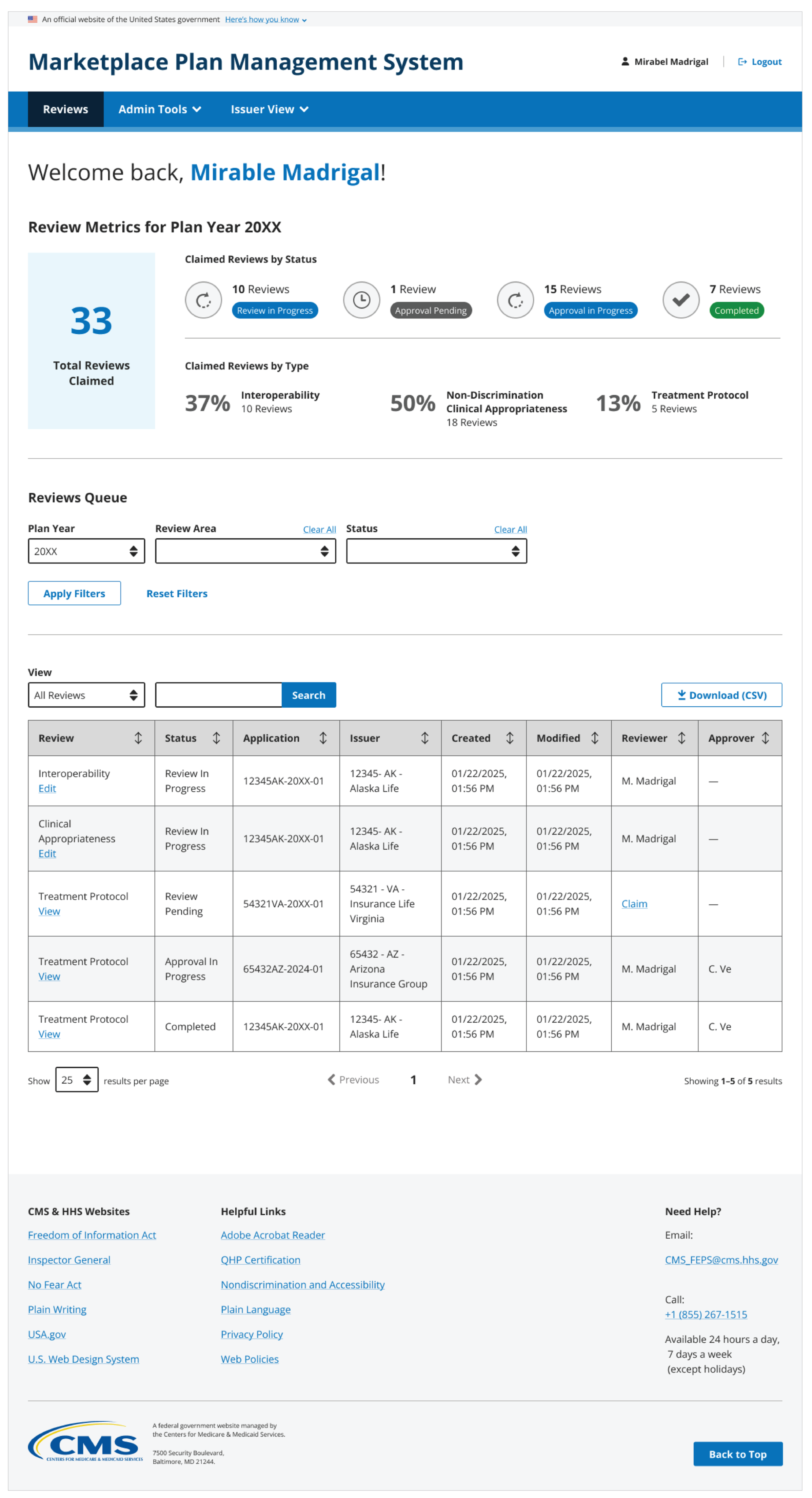
CMS lacked a centralized way to track insurance application status, leaving users uncertain about their progress, task ownership, and required next steps.
View Results Justification Required
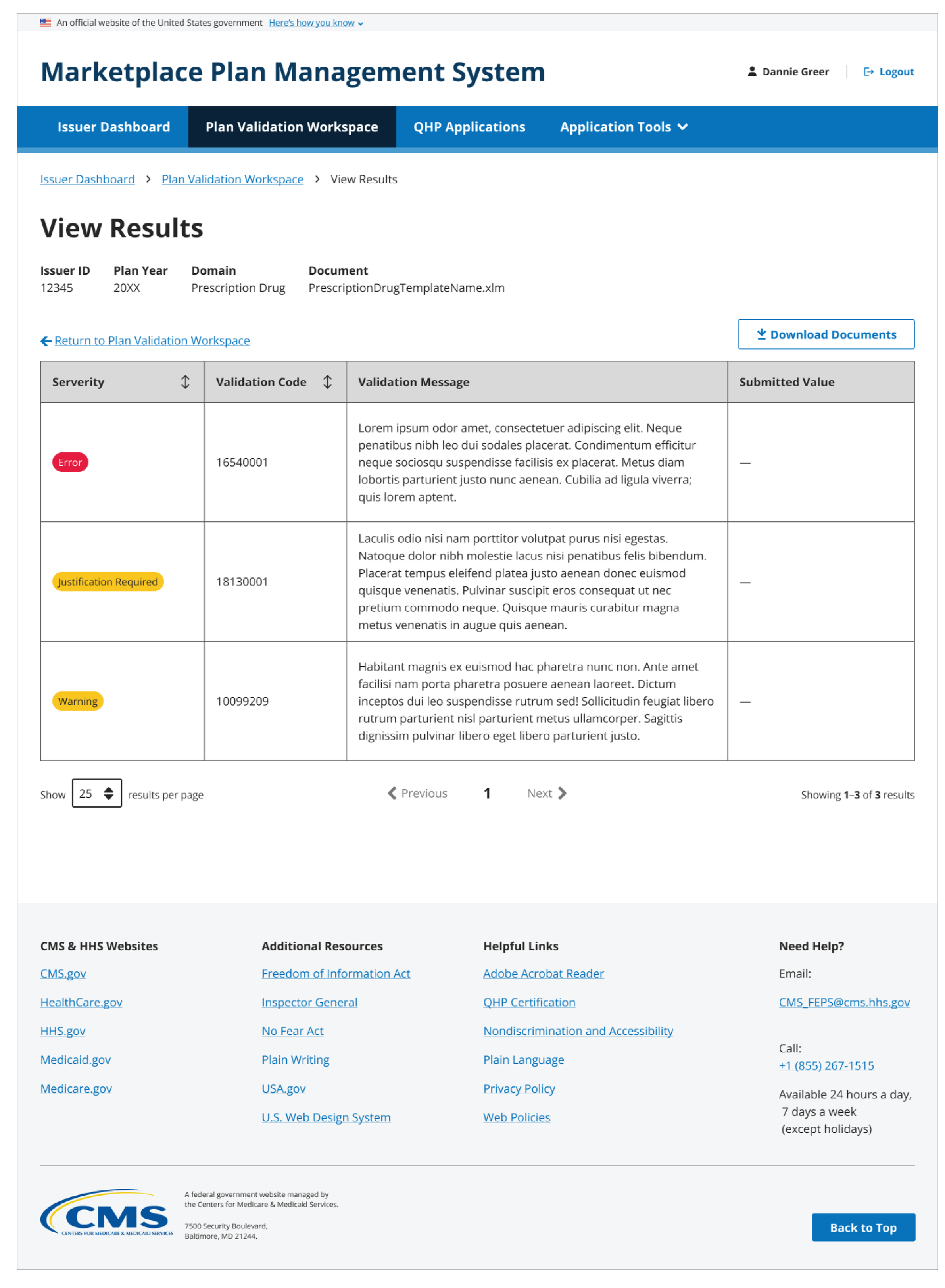
I partnered in discovery sessions with developers and business analysts to understand review logic, system constraints, and user needs. This informed the design of a Reviews Dashboard that improved clarity and accountability through:
A spreadsheet-style layout for efficient scanning
Step-by-step status indicators to visualize progress
Contextual tooltips outlining clear next actions
Consistent, plain-language labeling to reinforce transparency
Results Dashboard